More than 25,000 case papers relating to Pensions Appeal Tribunals for First World War veterans have been released on Scotland’s People for the first time.
What were the Pensions Appeal Tribunals?
The tribunals were set up in the aftermath of the First World War to enable disabled veterans and their dependants to challenge decisions made by the Ministry of Pensions. They contain significant amounts of medical, personal and military information, offering new opportunities for researchers to explore the stories of ordinary First World War veterans and their families. For more information about the records, please see our guide.
War pensions were a vital source of income for disabled ex-servicemen and their families. However, applicants had to prove to the Ministry of Pensions that a medical condition had been directly caused or made worse by war service. They often struggled to meet these strict eligibility criteria, leaving many dissatisfied with their treatment by the state. In 1919, Pensions Appeal Tribunals were established to enable ex-servicemen and their dependants to challenge these decisions.
The records now released on Scotland’s People are the case papers for the Pensions Appeal Tribunals for Scotland. Tribunal members used these records to decide whether an applicant received a pension. In addition to summaries of men’s medical and service histories, the records can include personal statements and letters which vividly illustrate the experiences of those that served in the war and their families.
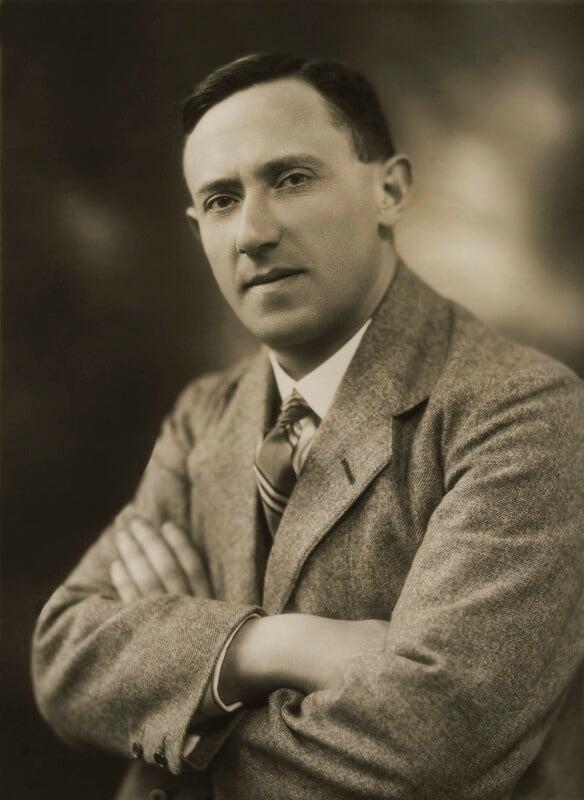
©National Portrait Gallery, London.
More than 70% of applicants to the Scottish tribunals were unsuccessful and the perceived harshness of the system was raised repeatedly in Parliament. The Scottish Labour MP Manny Shinwell described the tribunals as ‘graveyards of the hopes of many ex-service men’. This article draws on examples from the tribunal case papers to explore not only the struggles applicants faced when trying to access a pension, but also the support that they received from their communities.
Examples from the case papers
William Wilson - Edinburgh
Lance Corporal, Black Watch
Appeal reason: Corneal ulcer
During the heat of the Second Battle of the Marne in July 1918, William carried messages between his company and battalion headquarters. His route took him through heavy woods and undergrowth saturated with tear shell gas, leaving his eyes scarred and his vision impaired. As he waited with bandaged eyes to be evacuated, he may not have imagined the struggle he would face for a pension.
One of the major barriers faced by William and other applicants was that their official records did not include evidence of the medical condition for which they were claiming. Gaps in William’s medical history meant he had to go to tribunal to prove that exposure to gas in 1918 had a long-term impact on his eyesight. Because his evacuation had been carried out by the French army, it was not recorded on his army medical card. This lack of evidence about the severity of his exposure cast doubts about whether his eye injury had been caused by his war service. The tribunal sought an additional medical opinion and happily granted William his appeal.
Annie Martin - Bonnybridge
Widow of George Martin, Private in the Argyll and Sutherland Highlanders
Appeal reason: George’s death caused or hastened by war service
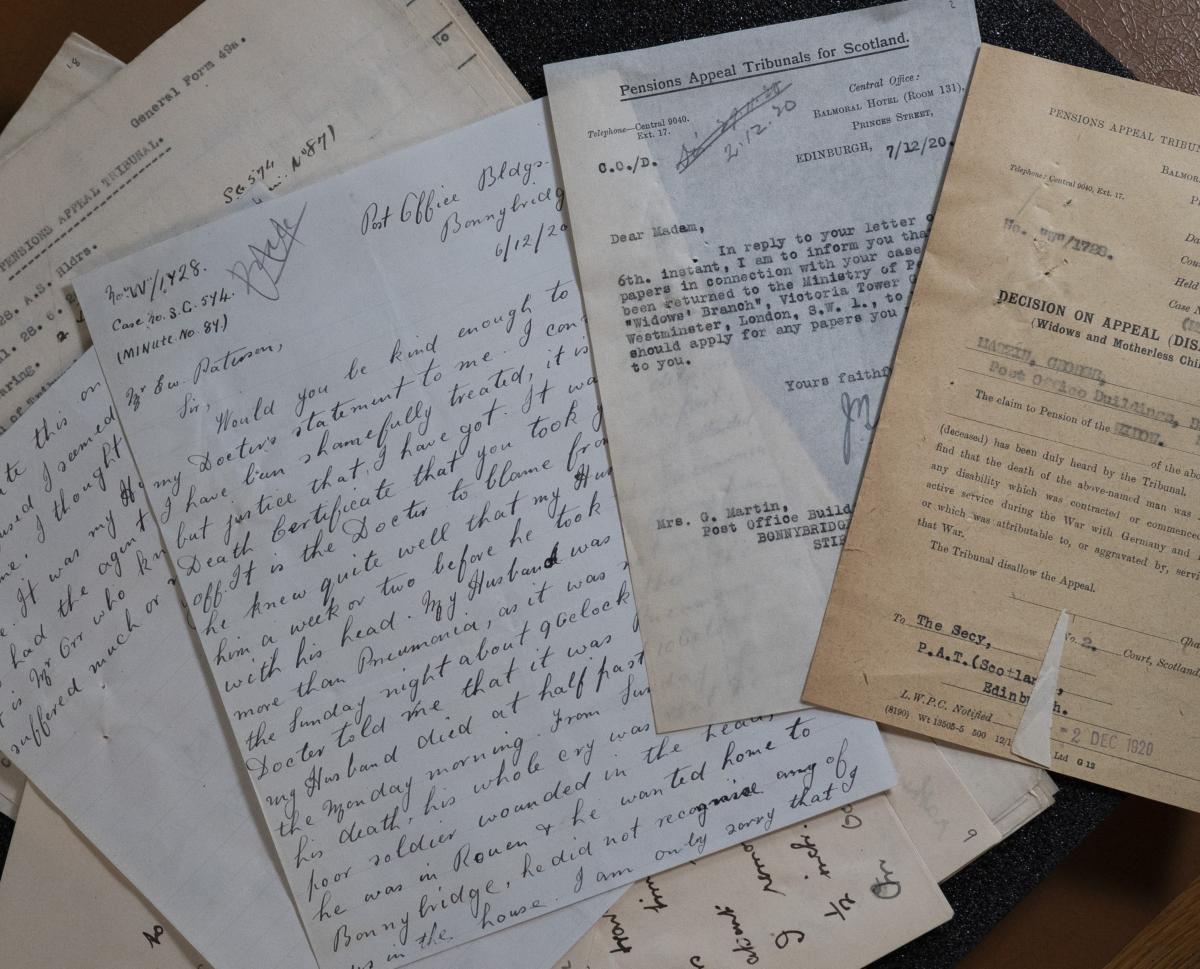
Crown copyright, NRS, PT6/11/1/167
For the dependents of ex-servicemen, the direct link between war service and a subsequent death could also be difficult to prove, as Annie Martin discovered. During the Battle of Ypres in 1915, fragments from a shattered rifle were lodged in George’s head and caused him to lose sight in one eye. After the war, he lived with constant headaches and nausea. George died of pneumonia in October 1918. Annie’s claim for a widow’s pension was denied by the Ministry of Pensions and also, in 1920, by the Pensions Appeal Tribunals. This was despite George’s doctor writing to the Tribunal to say that his war injury had made him more susceptible to pneumonia and prevented his recovery.
It can be difficult to understand exactly why a decision was made by a tribunal as they did not provide applicants with an explanation of their decisions. Consequently, we have very few clues about how a tribunal reached their conclusions. In Annie’s case, she was convinced that the tribunal was wrong about George’s death being unconnected to his war service. In a letter she wrote to the tribunal after her hearing, she said ‘he never knew what it was to have a day’s perfect health since his discharge, he never was without pain’.
William Leeming - Kirkintilloch
Private, Royal Fusiliers
Appeal reason: Gunshot wound
On the morning of 30th May 1918, 19-year-old William Leeming had just returned from a bombing raid at Arras. His company had been ‘severely cut up’ and he was ‘unnerved with the horrors of it all’. He finished cleaning his bayonet, which had been blackened for going over the top, and started on his rifle. The rifle went off and he was shot in the foot. William was court martialled and a transcript of the proceedings, including witness statements, are in his Pensions Appeal Tribunals record. In his defence, William argued it was a ‘pure accident… I am just 19’. William was found guilty of negligently injuring himself and sentenced to 21 days field punishment. William’s toe had to be amputated and after the war he was often off work because of it. Serious negligence or misconduct were reasons to deny a pension and William therefore had to appeal to tribunal. In this case, the tribunal decided to allow his appeal, and William was granted a pension. As in Annie’s case, we cannot know exactly why the tribunal reached this decision, but it may be that they decided that the accident was not enough to qualify as ‘serious negligence’.
Janet Wallace - Cellardyke
Widow of Robert Wallace, 2nd Hand, Royal Naval Reserve
Appeal Reason: Heart failure due to syphilis
‘There was no family in the Parish more respectable or respected’ than Janet and Robert Wallace. These were the words of the minister of Cellardyke to the tribunal. Now Janet was having to come to terms not only with her husband’s death in service in 1917, but that he had died as the result of syphilis. In her statement she told the tribunal that Robert had been a ‘kind and indulgent father... If he committed a folly then the punishment was expedited for his death ensued’. Like William Leeming, Janet was initially denied a pension because Robert’s death was deemed to be caused by his negligence or misconduct. Janet struggled with the stigma of this decision: ‘Is it that I and my children have to be scorned in the years to come and what am I to tell [my children] when they are old enough to understand the reason they have not been pensioned like other service children. It is hard enough to allay the suspicions of my neighbours with the small temporary allowance I receive’.
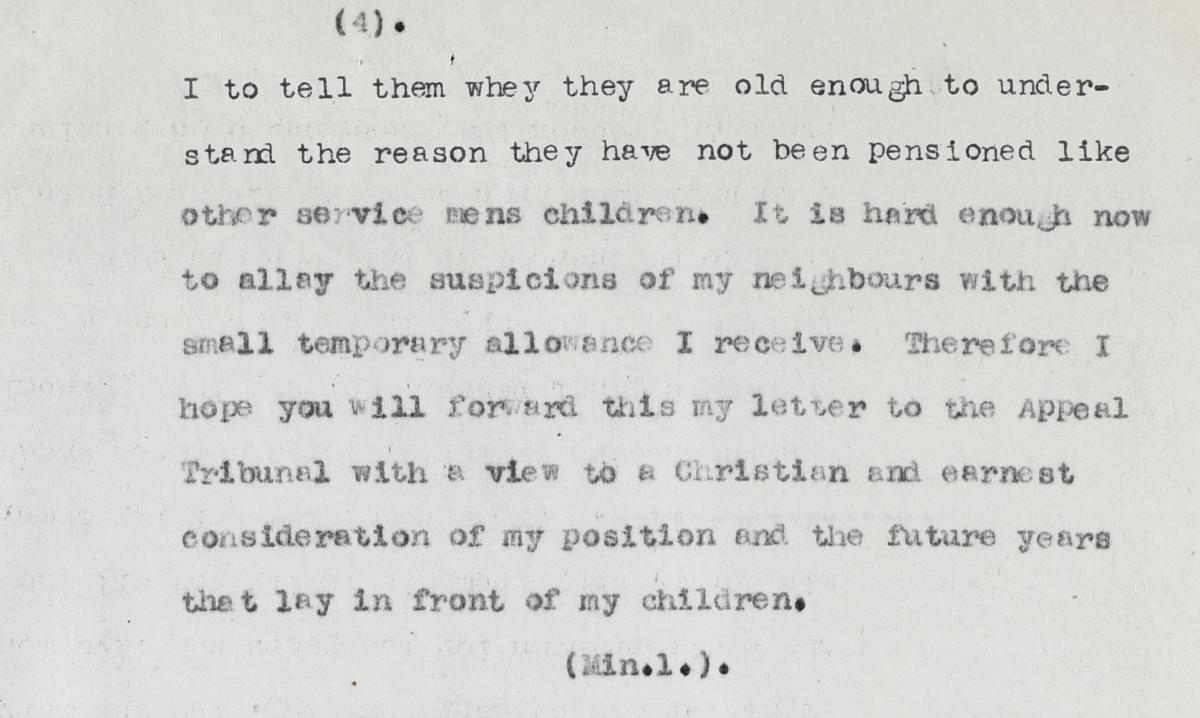
Crown copyright, NRS, PT6/5/1/163
Janet’s record also reveals a compassionate response to Robert’s illness and death. Her minister, doctor and the Fife Local War Pensions Committee, at least, knew about Robert’s illness and testified to his good character. His doctor argued that Robert’s death had been caused by his long absence from home due to the war: ‘he was a sober, industrious and highly respectable man. If he had stayed at home he would never have suffered from venereal disease’. Janet was awarded a pension, with the Tribunal ruling that heart failure due to syphilis had been contracted whilst on service.
David Renfrew - Tarbrax
Private, Scottish Rifles
Appeal reason: mental deficiency
David arrived in the village of Tarbrax in 1921 with some travelling showmen. After they left, he was found by members of Comrades of the Great War in a ‘destitute condition, living in a sort of dugout’. Founded in 1917, the Comrades had been set up to support ex-servicemen and in 1920 it was one of the founding organisations of the British Legion. Whereas Janet Leeming drew on the support of her local community, for David it was fellow ex-servicemen who would come to his aid. The Comrades not only ‘maintained’ David but also tried to get him a pension and medical help.
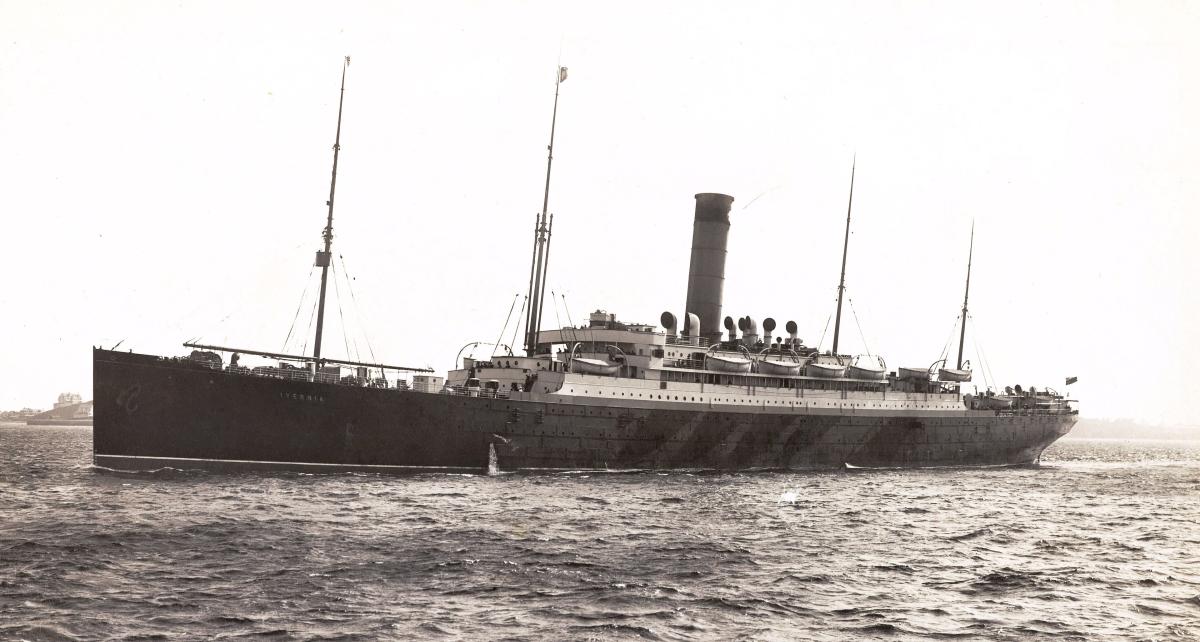
Public domain, via Wikimedia Commons
David had been on the RMS Ivernia when it was torpedoed and sank on New Year’s Day 1917. He claimed he had shell shock as the result of the experience, but medical examiners dismissed this. The doctor who examined David wrote that he ‘formed the conclusion that he was not suffering from shell shock, but that he was mentally defective’. This was a derogatory way of describing David as having what we would now call a learning disability. Two of the Comrades were with David when the Ivernia sank and were very definite that ‘before the sinking of the ship he was mentally quite normal’. It appears their testimony was disregarded. Lacking documentary evidence of shell shock and in the face of contemporary prejudice, it is unsurprising that David’s claim was denied. His experience shows how contemporary views of mental health, combined with missing or inconsistent evidence, conflicted with the tribunal’s strict requirements of attribution and continuity.
John Lehany - Edinburgh
Private, Cameron Highlanders
Appeal Reason: Mental disease caused or made worse by war service
John had served in France and was wounded in his arm. He was discharged in 1918 and in 1920 was admitted to an asylum with ‘paranoid dementia praecox’; what we would now call schizophrenia. John’s appeal was denied, but this was one decision that the chairman of the Pensions Appeal Tribunals for Scotland, W A Fleming, had doubts about. After the hearing, Fleming was sent a witness statement saying that John had been part of a firing party which had to shoot one of their comrades. The statement had been gathered by the Edinburgh Local War Pensions Committee, which had processed John’s application for a pension. They also provided additional statements to show that John’s mental health had been deteriorating since his discharge and strongly argued that John’s case had not been properly represented at the hearing. The tribunal’s decision could not be reversed, but Fleming wrote to the Ministry of Pensions to say that he was ‘willing to do anything I can to assist the man to get some sort of allowance’. Unfortunately, the Ministry did not agree: ‘the view of our medical people’, they wrote to Fleming, ‘is that if the effect of that experience was going to be as serious as is alleged it would certainly be expected to manifest itself at a much earlier date’. John did not get a grant.
Conclusion
Manny Shinwell described tribunals as ‘graveyards of hope’ and certainly these records show how applicants struggled to meet the Pensions Appeal Tribunals' strict eligibility criteria. The requirement to demonstrate a history of a medical condition may not have reflected people’s lived experiences and the official record may in any case have had gaps in it. However, the case papers also show how applicants and people in their communities challenged official narratives and evidence. Testimony from friends, neighbours, veterans associations, employers and doctors are often present in these records, frequently providing nuance and compassion which is absent from official responses. Nevertheless, it is often the voices of the applicants themselves that are the strongest. People like Annie Martin were not passive. They spoke out about the hardships and unfairness they suffered. In doing so, they provide us with a unique insight into their lives and experiences, and their sense of injustice about the way they had been treated. As Annie said, ‘I feel I have been shamefully treated. It is anything but justice that I have got.’